Cabinets · Planning guide
Under-sink storage: measure before you buy
A useful organizer has to fit around your plumbing, not just inside the cabinet.
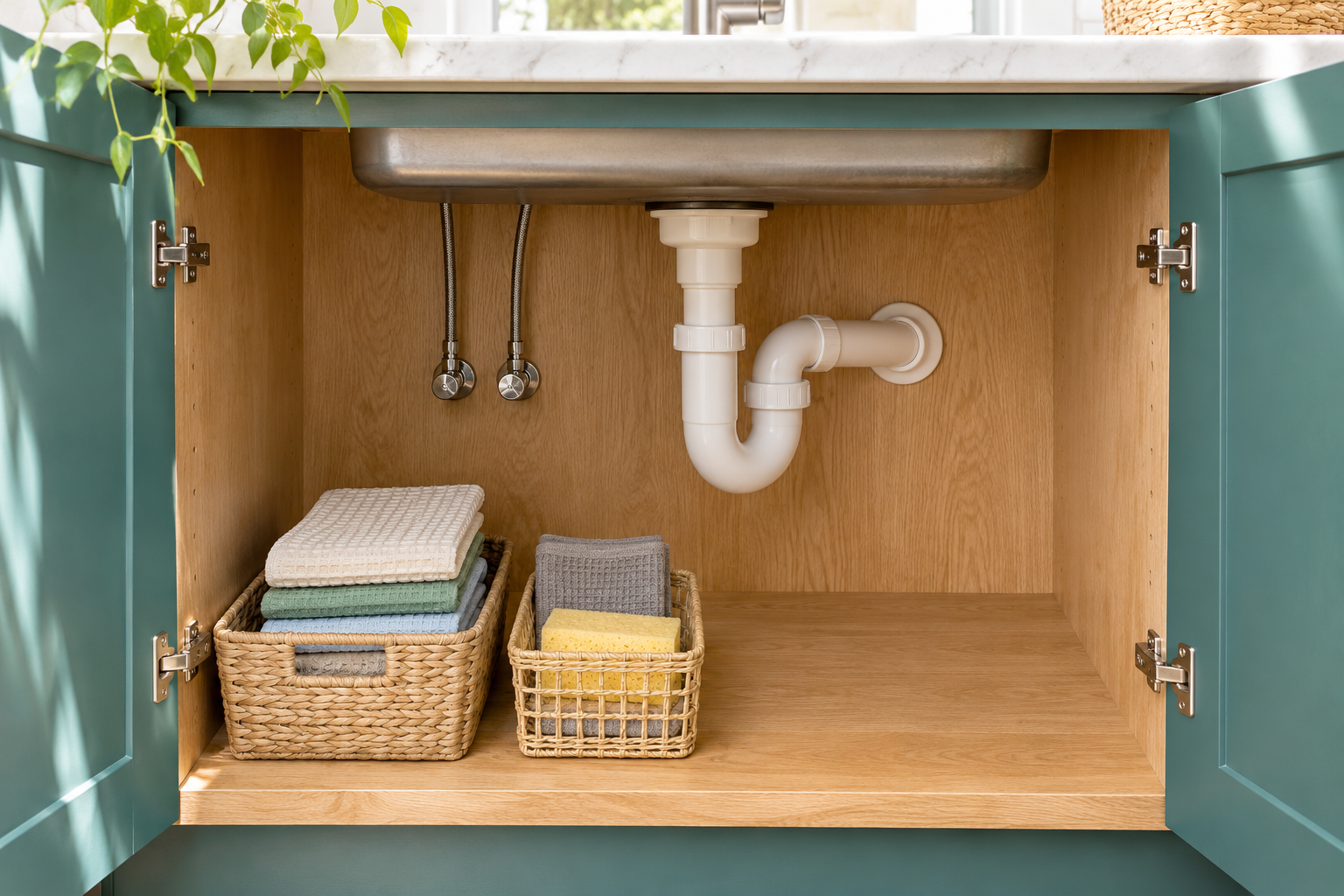
Start with the opening
Measure the narrowest clear opening with the door fully open. Hinges and a center frame can make that opening smaller than the cabinet interior. Record both measurements; a wide cabinet does not guarantee a wide drawer can slide through it.
Map the obstacles
Record usable depth and height on each side of the drain. Note water lines, shutoff valves and any disposal unit. Leave plumbing accessible. Check the tallest bottle or item you intend to store rather than relying on a product photograph.
Choose how things come out
A simple lift-out bin suits a small group of items you carry together. A pull-out drawer may improve access to the back, but needs a clear travel path and enough space in front of the cabinet. Two tiers can help only when pipes and stored items leave room for both.
Mock it up
Make a paper footprint using the candidate product’s published outer dimensions. Use folded cardboard to represent its height. Try the proposed placement and the door movement. A mockup can reveal obvious clashes; it cannot verify strength, exact assembly tolerances or installation requirements.
Keep safety separate from tidiness
An organizer is not a child-resistant barrier. Keep hazardous cleaning supplies in their original containers and follow their storage labels. CPSC recommends storing household chemicals in a locked cabinet or box, out of children’s reach. Do not treat an easy-access drawer as a safety upgrade.
Source
CPSC Poison Prevention Information Center
General planning guidance, not a product test. Follow the instructions and limitations for your exact product.