Shelves · Planning guide
Shelf risers versus stacking: choose the simpler setup
Extra levels help only when the things underneath remain easy to reach.
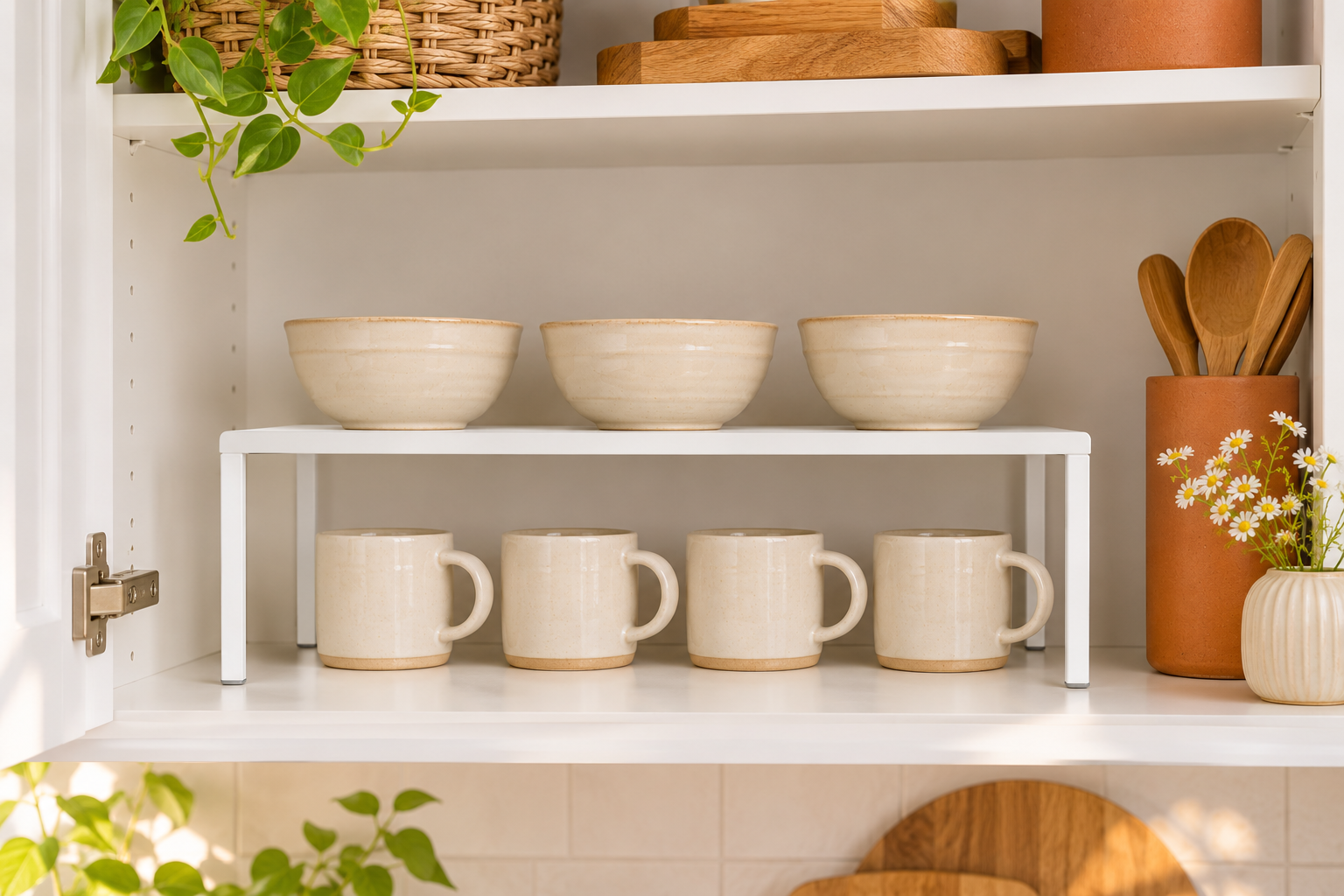
Identify the wasted space
A riser can use vertical space above short objects. Measure the shelf’s height and the tallest object intended for each level. Account for the riser platform itself; an advertised overall height is not necessarily the clearance beneath it.
Check the footprint
Measure the shelf depth and width, including lips and other obstructions. Confirm where the feet will sit. Do not assume two similarly shaped shelves can be stacked unless the manufacturer explicitly supports that configuration.
Compare the everyday movement
For identical lightweight items used together, a simple stack may be easier than a riser. For different items you reach for separately, another level can reduce rearranging. Test the motion with what you already own.
Read the load instructions
Use the manufacturer’s stated load and placement guidance for the exact version. Distribute items as directed and keep heavy or breakable objects where you can handle them comfortably. We have not load-tested any products for this guide.
Keep the decision small
Start with one location where a second level solves a clear access problem. Do not buy a multi-pack solely to fill every shelf. Reassess after normal use before extending the arrangement.
General planning guidance, not a product test. Follow the instructions and limitations for your exact product.