Pantry · Planning guide
Pantry bins: when a container helps and when it does not
Organize the routine first. Buy containers for a specific job.
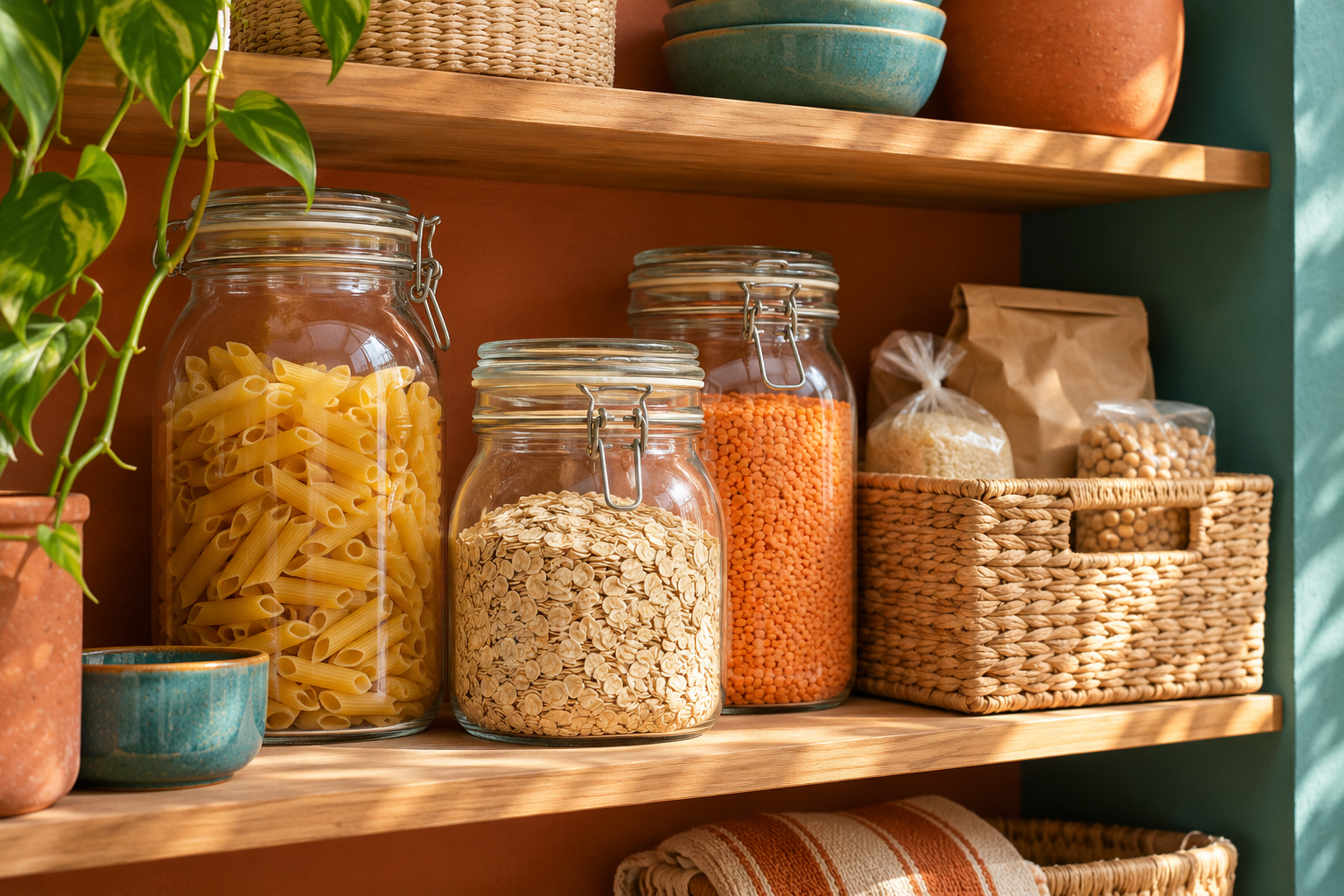
Pick one repeatable task
A bin can be useful for breakfast supplies, baking ingredients or snacks that come out together. If you already see and reach everything on a shelf, another container may simply add a step. Start with one shelf, not a whole-pantry makeover.
Measure the shelf and the route
Check usable shelf depth, width and height, including the front lip. For a bin you will lift out, leave enough room to grasp it. Verify that its handles, lid and widest edge fit; product capacity does not tell you the outer footprint.
Keep important package details
When practical, leave foods in their labeled packaging inside the bin. If you transfer food, preserve the name, allergen information, preparation directions, lot details and date information you need. Follow the food label’s storage instructions.
Think about cleaning and handling
Check the exact product’s care instructions before putting it in a dishwasher. A clear appearance does not establish the material or heat tolerance. Avoid filling a large bin beyond what you can comfortably lift.
Try the layout before committing
Use a container you already own to test the grouping. If it improves retrieval and restocking, compare a permanent option with the dimensions you recorded. Keep the package and return terms in view when deciding whether a set is worthwhile.
General planning guidance, not a product test. Follow the instructions and limitations for your exact product.